How I Navigate Authentic Korean Food Culture Beyond Famous Tourist Restaurants
How I Navigate Authentic Korean Food Culture Beyond Famous Tourist Restaurants
Three months ago, during my first week in Seoul, I fell into the classic traveler trap. I stood in a shivering, forty-minute queue outside a highly rated barbecue joint in Myeongdong, guided entirely by a popular English travel blog. When I finally sat down, I was handed an English menu with inflated prices, served by staff who rushed me through my meal, and given meats that felt strangely sterile and catered to Western palates. It cost me nearly 50,000 KRW, yet left me entirely unsatisfied. That chilly evening, walking back through the narrow, neon-lit alleys of Mapo-gu, I decided to change my approach entirely. I wanted to experience the real, unfiltered culinary landscape that locals actually enjoy every single day.
Stepping away from the sanitised tourist hubs requires a bit of courage, but the rewards are immense. Through trial and error, I discovered that the most memorable culinary moments in Korea do not happen under English-speaking staff or giant TripAdvisor stickers. They happen in tiny, steamy joints where the menu is glued to the wall in fading Korean script, and the owner is an elderly grandmother, an imonim, who communicates through generous refills of side dishes. This guide details my personal, boots-on-the-ground strategy for finding, entering, and enjoying these hidden culinary gems without feeling lost or intrusive.
Why do famous tourist restaurants in Korea often disappoint?
Most tourist-centered restaurants adapt their menus to global tastes, losing the intense heat, complex fermentation, and garlic-heavy depth of authentic Korean food while inflating prices. When a restaurant begins catering heavily to international visitors, subtle shifts occur in the kitchen. Spicy stews lose their fiery kick, fermented dishes like kimchi are served less aged to avoid challenging sensitive palates, and sugar levels are often increased to match global fast-food profiles.
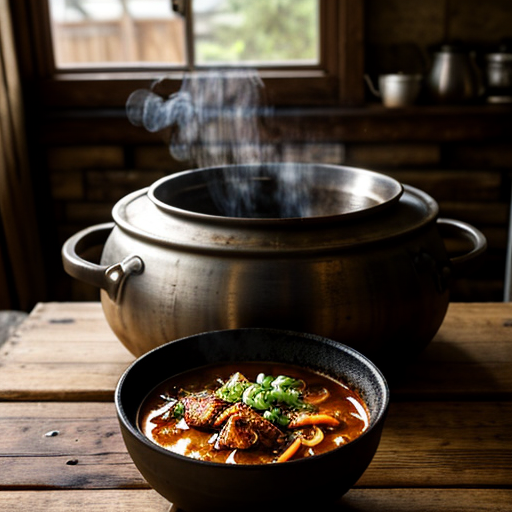
My turning point occurred in Euljiro, a sprawling maze of industrial printing shops and hardware stores. A few streets away from the heavily promoted noodle shops, I watched local workers stream into a tiny, unmarked basement eatery. Out of curiosity, I followed them. Inside, the air was thick with the rich, pungent aroma of slow-simmered pork bones. There were no English signs, no polished interiors, just metal tables and low-backed stools. I ordered by pointing at what my neighbor was eating. What arrived was a bubbling bowl of Gamjatang (pork backbone soup) that cost a mere 8,000 KRW. The depth of flavor, enriched by wild sesame seeds and hours of simmering, was incomparably superior to the watery, sweet versions sold in tourist districts. It was proof that real Korean food relies on uncompromising, rustic depth rather than aesthetic presentation.
How can you spot a genuine local Korean restaurant instantly?
You can identify authentic spots by looking for monochromatic, single-item menus on the wall, elderly owners running the kitchen, and digital cues like high Naver Map ratings with exclusively Korean reviews. If you see a restaurant with a giant, colorful banner showcasing twenty different dishes ranging from tteokbokki to bibimbap and fried chicken, keep walking. True Korean culinary masters specialize in exactly one thing, perfecting a single broth, cut of meat, or style of noodle over decades.
The digital landscape is your most powerful tool, but you must look in the right places. Google Maps is notoriously inaccurate and outdated in South Korea due to government restrictions on spatial data. Instead, I learned to rely on Naver Map and Kakao Map. My golden rule is to look for establishments with a rating above 4.2 stars on Kakao Map, as local Koreans are notoriously brutal with their ratings on that platform. If a place has over fifty reviews, mostly written in Korean, detailing how the broth tastes like their grandmother's recipe, I know I have found a goldmine.
| Platform | Primary User Base | Rating Sensitivity | Best Practical Use |
|---|---|---|---|
| Google Maps | International Tourists | Highly Inflated (Often 4.5+) | Finding English menus and vegetarian options |
| Naver Map | General Korean Public | Moderate (Polite and photo-heavy) | Checking operating hours and daily menu updates |
| Kakao Map | Hardcore Local Foodies | Very Strict (Anything above 4.0 is excellent) | Uncovering unfiltered, brutally honest local feedback |
What specific steps do I follow to order at non-English establishments?
Use Papago for real-time visual translation, point at the wall menu while saying "I-geot-ju-se-yo" (Please give me this), and observe surrounding tables to mimic their dining style. Navigating a menu with zero English can feel incredibly intimidating. During my second week, I walked into a soup house in Jeonju and accidentally ordered raw beef tripe instead of the famous bean sprout soup because I could not read the cursive Hanja-Korean script on the wooden wall panels. I ate it to be polite, but it was a harsh lesson in preparation.
Now, I follow a strict, stress-free routine that has never failed me. The moment I sit down, I take a deep breath and observe. I do not panic if there is no paper menu. I open Papago, set it to image translation, and scan the wall. Once I decide, I catch the eye of the server, raise my hand slightly, and use simple, polite Korean phrases. Here is the exact blueprint I use to navigate the ordering process smoothly:
- The Greeting: Nod politely upon entering and hold up fingers to show your party size. Do not wait to be seated unless it is incredibly busy; just find an open table.
- The Selection: Use Papago's camera function to read the wall menu. Look for the top-listed item, which is almost always the restaurant's signature specialty.
- The Call: Gently call out "Sajang-nim" (Respected Owner) or "Imo-nim" (Auntie) to get their attention. Never wave frantically or shout.
- The Order: Point to the menu item and say, "I-geot, han-gae ju-se-yo" (One of this, please) or "du-gae" (two) if dining with a partner.
- The Confirmation: If they ask follow-up questions you do not understand, look around the room, point at a neighboring table's setup, and nod with a smile.
Do not let the language barrier stop you from exploring. I have found that local owners are incredibly patient and genuinely thrilled to see an international visitor appreciating their traditional food. They will often walk over to show you the correct way to mix a bowl, wrap a lettuce leaf, or adjust the stove flame, turning a simple meal into an interactive, warm cultural exchange.
What are the unspoken dining etiquettes in back-alley Korean eateries?
Always check the sliding drawer under your table for utensils, understand that water and side dishes are self-service after the first round, and pay at the front counter rather than asking for the bill at your table. These minor details might seem trivial, but knowing them immediately signals respect and saves you from awkward moments. During my first solo dinner in a tiny diner in Busan, I sat embarrassedly for ten minutes waiting for the server to bring me chopsticks, only to watch a local reach under my table and slide open a hidden drawer packed with sanitized spoons, metal chopsticks, and napkins.

Another major difference lies in how side dishes, or banchan, are handled. In authentic local spots, the first round of banchan is served to you, but subsequent portions are almost always self-service. Look for a counter labeled "Self" (셀프). Taking your own small plate to refill fresh kimchi, pickled radishes, or seasoned fish cakes is the norm. It keeps the restaurant running efficiently and prevents food waste, which is highly appreciated by the staff. When you finish eating, do not leave your money on the table. Simply walk to the register near the door, say "Jal meog-eot-seub-ni-da" (I ate well, thank you), and present your card or cash.
Navigating these local spaces has completely transformed how I experience South Korea. Instead of viewing food as mere fuel or a scenic photo opportunity, I now see it as an entry point into the daily rhythms of local life. The warmth of a tiny, steam-filled room on a rainy evening, the rich taste of a recipe refined over generations, and the quiet pride of the owners are things you simply cannot find on a tourist bus route. By shifting your reliance away from global platforms and embracing the local ecosystem, you unlock the true soul of Korean hospitality.