Cookie-Cutter Cities: Why Do All Korean Apartments Look Exactly the Same?
목차
- The View from My Window: A Concrete Sea
- The Economic Engine Behind the Uniformity
- Standardization as a Survival Strategy
- The "Apartment Brand" Phenomenon
- The Comparison of Living Styles
- The Cultural Preference for Efficiency
- Are We Seeing a Shift?
- Frequently Asked Questions
- Final Thoughts: The Beauty of Function
The View from My Window: A Concrete Sea
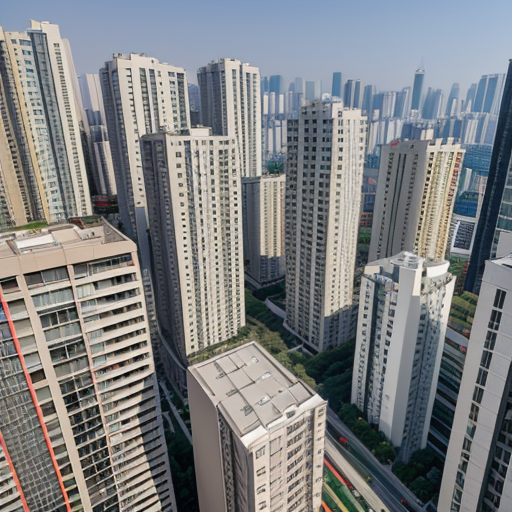
I remember landing in Incheon for the first time. As the bus sped toward the city center, I looked out the window and saw rows upon rows of towering, identical apartment blocks stretching toward the horizon. It felt like I had stepped into a simulation where someone hit 'copy and paste' a thousand times. To be honest, it was a bit overwhelming. Have you ever stood in a neighborhood and felt like you could be anywhere in the country? That is the unique reality of living in a Korean apartment complex.
After spending significant time researching urban development and chatting with locals who have lived through the rapid modernization of the peninsula, I started to realize that this wasn't just a design choice. It was a massive, calculated, and necessary response to one of the fastest societal shifts in human history. Let’s dive into why why Korean apartments look similar and why this design philosophy is actually a mark of extreme efficiency.
The Economic Engine Behind the Uniformity
Here’s the thing: you can’t talk about these buildings without talking about speed. Following the mid-20th century, the country needed to house millions of people who were migrating from rural areas to urban centers like Seoul almost overnight. There was no time for individualist architectural expression. The government needed to build mass housing, and they needed to build it yesterday.
Standardization as a Survival Strategy
By using a standardized design—often referred to as 'pre-fab' logic even if they were built on-site—construction firms could minimize waste, optimize labor, and drive down costs. When you build the same floor plan 500 times in a single complex, your team gets incredibly fast at it. It’s like the Henry Ford assembly line model, but applied to high-rise living.
As someone who has analyzed urban planning trends, I’ve found that this level of standardization is actually one of the reasons why the country successfully avoided the slum-like conditions seen in other rapidly developing nations.
The "Apartment Brand" Phenomenon
What does this mean for you if you’re looking to buy property? It means that in Korea, your apartment isn't just a home; it's a financial asset tied to a brand. Major construction firms have cultivated reputations that act as a proxy for quality. Whether it’s a Samsung-backed development or another major conglomerate, these identical apartment blocks are designed to be recognizable, reliable, and easy to trade in the real estate market.
The Comparison of Living Styles
| Feature | Standard Apartment | Standalone House |
|---|---|---|
| Construction Speed | Very Fast | Slow/Traditional |
| Resale Value | High/Predictable | Variable |
| Maintenance | Managed by Complex | Self-Managed |
The Cultural Preference for Efficiency
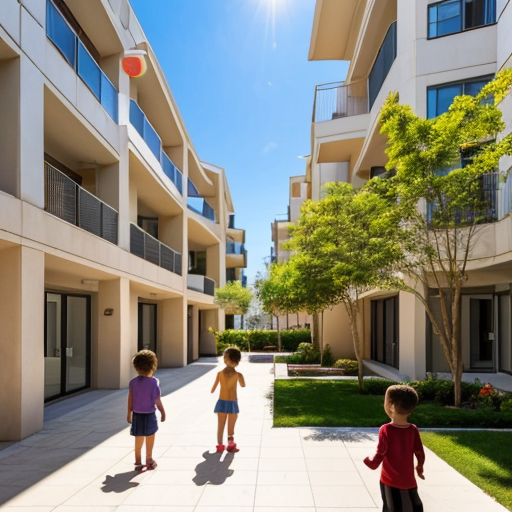
I’ve heard people argue that these buildings look 'boring,' but that’s a very Western-centric perspective. From the perspective of a local resident, these complexes offer something far more valuable than aesthetic diversity: convenience. Most large complexes include gyms, daycares, convenience stores, and playgrounds all within the gated area. The uniformity is a trade-off for a hyper-efficient lifestyle where everything you need is a three-minute walk away.
Let me explain: when you live in a tower that looks like the others, you aren't sacrificing your identity. You are buying into a system that values communal accessibility. You don’t have to worry about whether the local area has infrastructure—the developers build the infrastructure *with* the apartments.
Are We Seeing a Shift?
Here’s the interesting part: the tide is slowly turning. In recent years, newer developments have started to move away from the 'drab gray' look of the 1990s. Architects are incorporating more glass, better color palettes, and unique rooftop features. However, the core 'tower in a park' concept remains. Why? Because the geography of the peninsula is mostly mountainous. There is very little flat land, so building high-density apartment complexes remains the only logical way to house a massive population in a small space.
Frequently Asked Questions
- Why are the apartment numbers so high? Many complexes feature towers with numbers like 101, 102, and so on, which helps in navigation and parcel delivery systems.
- Do these apartments have good soundproofing? Newer complexes are built with reinforced concrete and are generally much quieter than older, pre-2000s builds.
- Is it true that most people live in apartments? Yes, more than 60% of the population resides in multi-family high-rise housing.
- Why do they all have those specific balconies? These were designed to maximize natural light (the 'Namhyang' or South-facing preference) for energy efficiency.
- Is the interior of these apartments also identical? While they share base structures, modern interior renovations have become a huge industry, allowing homeowners to customize the look completely.
Final Thoughts: The Beauty of Function
Next time you see a photo of a sea of identical high-rises, try not to see it as a lack of creativity. Instead, see it as a monument to rapid economic growth and a unique approach to urban density. It isn't for everyone, but for millions, it’s home. What do you think—would you trade architectural diversity for the extreme convenience of these massive, uniform complexes? Let me know in the comments below!
If you enjoyed this deep dive, check out my other posts on The History of Urbanization in East Asia or How to Navigate the Korean Real Estate Market for more insights!